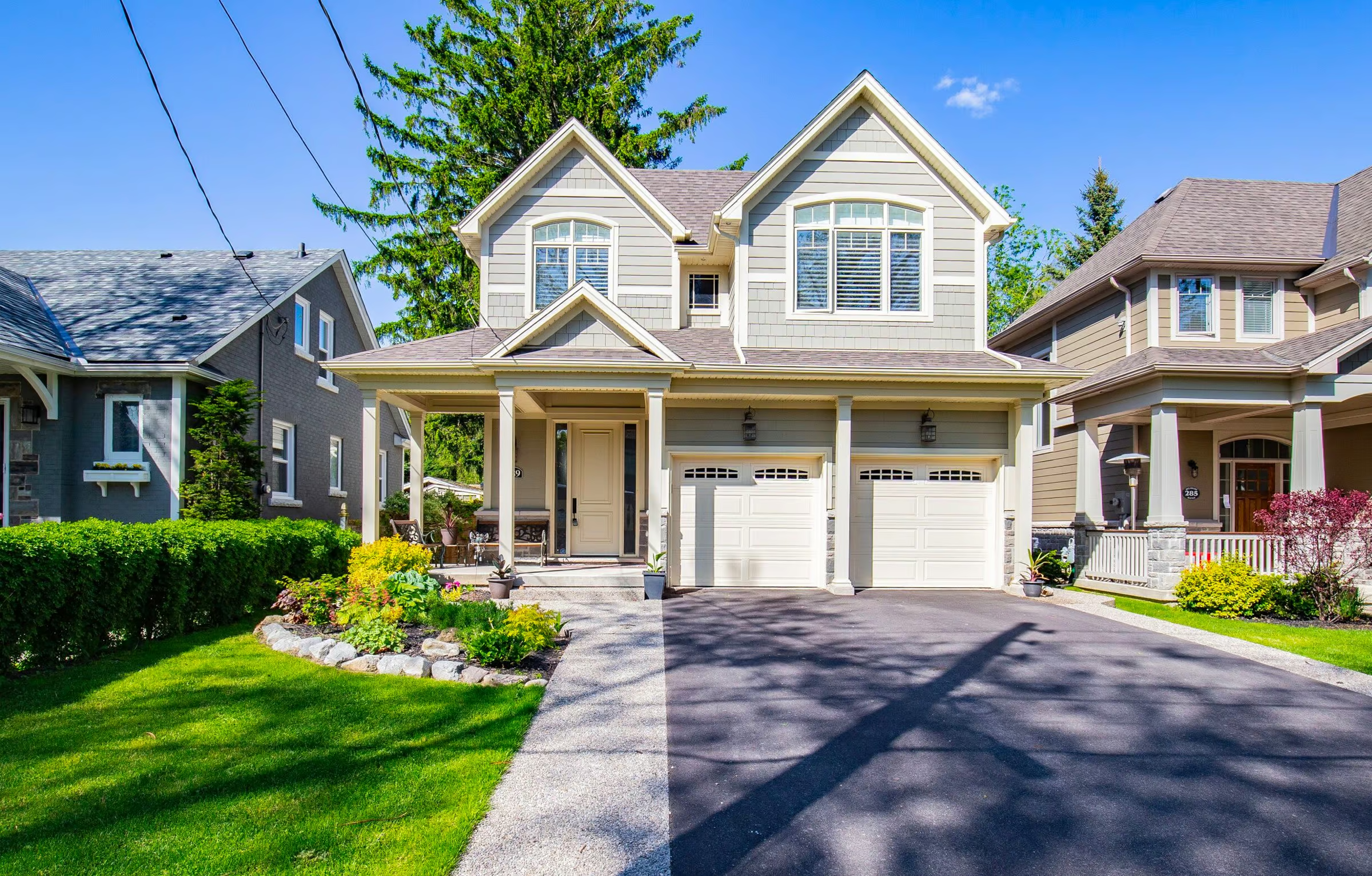
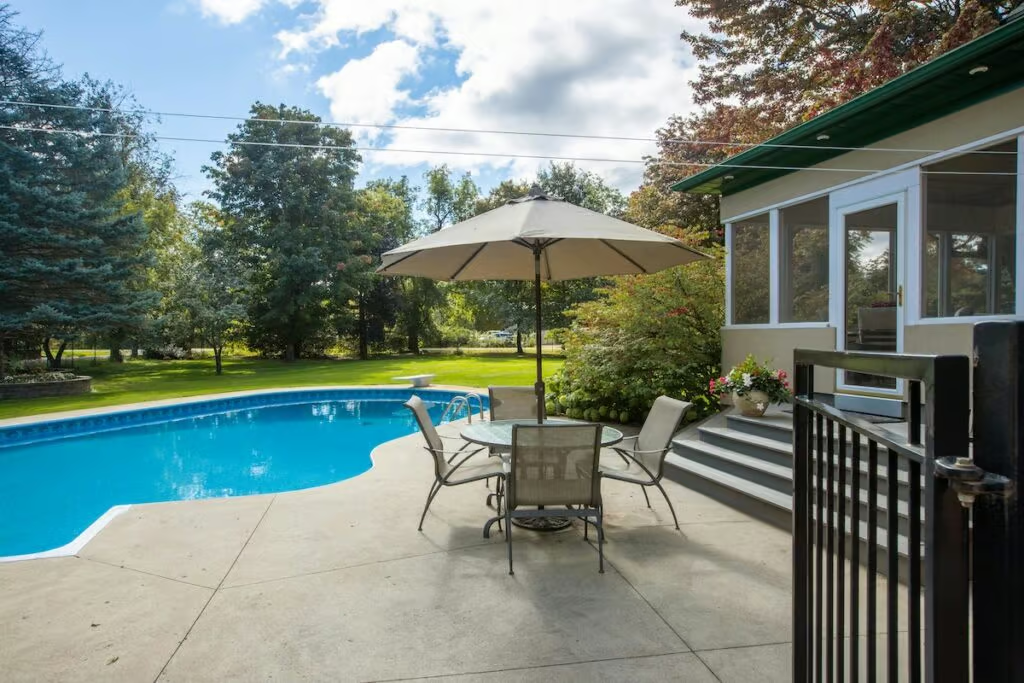
Get An In-Home Evaluation

5 Positive Signs That You Should Buy Right Away

Saturday November 2, 2019

Buying a Home

Rectangle Created with Sketch.

Finding a house to buy is no easy task. It takes many dedicated hours of searching the Internet, going to open houses, speaking with local real estate agents and so much more. But then comes a moment when you step into a house and you just know that you’re home. But buying a house is a big decision.

How do you know it’s the one?

  1. You’re Excited

After looking around the house, do you feel giddy? Are you envisioning yourself living there? Do you see the perfect spot to put that china cabinet that doesn’t ever seem to fit quite right? You just might be home.

If you find that you can’t stop thinking about the house or wipe that contagious smile off your face, chances are you’ve fallen madly in love. It might be time to really consider having another look or even putting in an offer.

  1. You’re Bragging

Did you call your mom and tell her all about the gorgeous fireplace? Are you going on and on about how big the backyard is to your girlfriends at coffee? Or perhaps your kids have heard just about enough of how perfect the master bedroom’s en-suite bathroom is.

Sounds like you found your dream home. If you can’t stop telling anyone and everyone who will listen about this beautiful house you saw, you might want to bump it to the top of your list.

  1. It Meets Your Needs and Wants

Not every home is going to meet all the points on your checklist. It’s all about determining what features of a house you’re willing to compromise on, and which are deal-breakers. A garage might have to be overlooked if the basement is finished and family-friendly. Your kids might have to share a bathroom if the kitchen recently had a stunning remodel.

If the house meets just about all your needs and wants, you need to act fast. Chances are you aren’t the only one who is looking for those qualities in a home, and houses like that don’t last on the market long.

  1. You Don’t Want to Keep Looking

Listen to your intuition.

If your intuition is strong about this home, you might not be super motivated to go and look at the rest of the houses that were originally on your radar.

That beautiful property a few blocks away may have seemed like the perfect home before you set foot in this one. Now that house has fallen to the bottom of the list, because let’s face it, no other home is going to compare to this one. So why even bother?

If you have this mindset after seeing the house, you are home.

  1. Your Realtor Agrees

The opinion of your realtor should never be overlooked.

Your real estate agent is on your team. They always have your best interests at heart. The last thing your realtor would want to do is advise you on a home that won’t make you happy long-term. If your realtor thinks that the property is a wise investment and has the potential to make you and your family happy, that is a clear-cut sign this house was built for you.

If you’re looking for houses for sale in Burlington, Oakville, or Waterdown, contact our local real estate agents at Woolcott Real Estate to get started.

7 Questions to Ask Before Hiring an Agent to Sell Your Home

Friday November 1, 2019

Selling your Home

Rectangle Created with Sketch.

Most home sellers take the task of hiring an agent very seriously, and it’s no wonder. Making a quick and profitable sale requires hard work, dedication, and real estate expertise! Finding a professional who brings all of that (and more) to the table means asking the right questions. It all starts with an interview, and a bit of preparation on your part can help ensure that you wind up working with the best.

If you’re thinking of hiring a particular agent, here are seven questions to ask an agent before selling your home…


1) How well do you know my area?

Home buyers are thorough. They’ll ask about everything from nearby schools to commute times and what families in your area are like. Your agent needs to know the answers to these questions. Before hiring someone, ask them how long they’ve been working in your community. You can delve into their favourite parks, cafes, restaurants, and more. If they do the area justice, you can be sure they’ll do the same when buyers come calling. An intimate knowledge of local market trends and nearby sold prices will also make them better equipped at every step of the process—from pricing to negotiations!

2) How will you market my home?

An experienced agent will have a marketing strategy in mind from the beginning—one that goes beyond planting a “For Sale” sign out front. From virtual tours to social media ads to print materials, the professional you decide to work with should use many different tools at their disposal. The tactics they use shouldn’t be chosen at random—instead, they should be based on your goals, circumstances, and the specifics of your home. Put simply, don’t be afraid to ask about strategy and next steps!

3) Can I see sample marketing materials?

While we’re on the subject of marketing, not all materials are created equal. Put yourself in a buyer’s shoes. When you’re perusing online listings, which homes would grab your attention? Would they be the ones with beautiful, professionally-taken photographs, or the ones that contain a few images captured on an iPhone? From listings to print materials and ads, every item used to promote your home should be of the highest quality. To get a sense of what you can expect, ask the agent you’re thinking of working with to see materials they’ve put together in the past.

4) What are the costs involved?

When you walk into a real estate agent’s office, you’re bound to have money on your mind—and we’re not just talking about your home’s sale price. Before you decide to work with a professional, be sure you know all of the costs involved. Here in Ontario, sellers usually pay between 4 and 6 per cent in commission fees. That amount covers the services provided by both their own representative and the buyer’s agent. During the interview process, you should feel comfortable asking about fee structures and how they break down! There will also be an assortment of closing costs associated with your purchase, and your agent can help you understand what they’ll cover.

5) How many homes have you listed in the last year?

An agent can present very well without having sold a whole lot of homes. It’s certainly nice to have the right designations, a professional-looking website, and polished answers for all of the questions you ask. But the proof is in the pudding—and the truth is, you’re better off with a full-time agent with a strong selling track record. We’re talking about someone who has helped sell more a small handful of properties in the last 12 months! Ask for the numbers, and be wary if it’s only a couple of homes.

6) Can you connect me to other professionals?

When your home goes on the market, it should be clean, decluttered, and beautifully staged. Along with home preparations, you’ll require legal expertise throughout the selling process. In other words, there’s a lot that goes into a successful home sale—and there are almost always many professionals involved. The good news is, the right agent will have trusted connections to call on when need be. To make sure you’ll have every advantage when you’re selling, ask the real estate professionals you interview about their networks—and how they can benefit you.

7) Can I speak to past clients?

Interview questions, credentials, past marketing materials…when you’re looking to hire an agent, it’s all part of the puzzle. But there’s one more piece that can help ensure that you hire the best professional for the job, and that’s references. An agent with a great track record should have no problem connecting you with satisfied clients. Ask specifically to speak to sellers. Once you have a couple of names, prepare a few questions about the results that the agent achieved—and what working with them is really like.

Are you ready to sell your home? We have the local market knowledge and experience to help. Contact us to discuss your needs today!

The Complete Guide to Applying for a Mortgage

Friday November 1, 2019

Buying a Home

Rectangle Created with Sketch.


You’re about to embark on the journey of a lifetime. Buying a home can be such an exciting experience. Whether you are purchasing a home with a partner, significant other or yourself, there may be parts of the process that you find confusing or overwhelming. You don’t buy a new home every day, after all! That’s why the expertise and guidance of a local realtor can really come in handy. To help you with this process, we’ve put together a complete guide to applying for a mortgage.

Read on to learn more about the 10-step mortgage application process!

Pre-Qualification

The first step in the mortgage application process is pre-qualification.

During this step, you’ll be provided with a brief estimate of how much you’re entitled to borrow for a mortgage. You get this estimate by providing basic financial information, such as debt, income, and savings. The pre-qualification process can usually be done online or over the phone, free of charge.

Pre-Approval

The pre-approval process is much more thorough than pre-qualification. This is where the lender does a complete assessment of your financial situation. Most of the work for the application process is completed during the pre-approval, so you’ll save yourself lots of time later once you’ve found your new home.

You’ll have to submit various financial documents, such as:

  • Proof of employment, including two paystubs
  • Proof of bonuses, including T4s for the past two years on average
  • Debt (credit cards, car loans, student loans, and the minimum payments for each)
  • If you own a business, T1 Generals and Notice of Assessments from the past two years
  • Two to three months of bank and investment statements
  • 90-day down payment history
  • T4A’s

During the pre-approval process, you’ll find out what the maximum amount that you can borrow for a mortgage is. This, of course, happens after the lender has had a chance to completely review your credit report.

There may be restrictions to the agreement. For example, the lender needs to approve the property. But in most cases, the fact that you are pre-approved proves that your financial situation is strong enough to qualify for a mortgage.

Now, the hunt for a home can really begin!

Mortgage Application

Congratulations! You’ve found the home you were looking for all along. Now it’s time to formally apply for a mortgage. This application will ask you questions about your financial situation and the property you’re interested in.

You may have to provide the following information:

  • The amount you want to borrow
  • The type of home
  • The address of the home you intend to buy
  • The estimated value of the home (completed during a home evaluation)
  • The annual property taxes
  • The expected sale price

If you’ve been pre-approved, your financial documents and credit have already been reviewed. If not, you’ll need to provide that information now. Try to be accurate as possible during the application process to help avoid issues later on and risk delays, or even losing your dream home.

Processing

If the estimate is accepted, the lender may send a mortgage processer your application, financial documents, and credit report for review. A mortgage processor is a company that reviews your information and financial documents to ensure accuracy and that the house can legally be sold.

Any issues will be brought to light at this point in the application process. If you have missed payments on your other loans, you may need to provide an explanation in writing. If you have missed payments in the past, it may be wise to prepare for this.

The mortgage processor may also ask you to submit additional documents for the review. Sometimes this happens because of missing pages, various errors, or a government program requires a unique document.

Appraisal

An appraisal of the home will help determine the accurate value of the property. The lender will hire a professional appraiser for this step, as an expert opinion will provide the most accurate estimate of the home.

The appraiser will come to a conclusion based on the size of the house, size of the property, general condition of the home, location, and amenities. Within three days of the appraisal, you will receive an estimate and a report that clearly outlines how they came to the proposed value. If the appraisal comes in lower than what was agreed upon between you and the seller, you have the option to pay the difference and lender will give the loan based on appraised value.

If this is the case, you do have a few options. You could negotiate with the seller to lower the price, ask them to take out a second mortgage on the home to cover the difference or provide a larger down payment to cover the difference.

Underwriting

The lender will receive a report once the appraisal and review are complete. This report will help the lender to decide if they will approve or deny your loan or ask you for additional information or documents. The lender will approve your loan after unwriting if they are content with your application and review.

Closing Disclosure

You will receive a closing disclosure, which is sometimes called a Mortgage Commitment Letter, at least three business days prior to the closing date. This will provide you with enough time to compare the information in this document to the loan estimate. The information within the two documents is quite similar, although the closing disclosure is what they are offering you.

The closing disclosure will include information about the mortgage. including payments, term, rate and amortization, and any conditions need to be fulfilled at the lawyer’s office.

Insurance

Usually, a lender will ask for proof of home insurance. This is to help protect their investment, and honestly, you should have it either way. You’ll need to apply for insurance immediately after you’re approved for the loan or speak with your current insurance company about the new address.

The insurance company can provide you with an insurance binder, which is essentially temporary coverage that lasts for about 30 days. This happens in the case that the insurance company cannot complete your application before the closing date, due to time limitations. Once the binder is complete, your insurance should be ready to go.

Closing

You made it! It’s finally time to close.

The closing happens during an appointment where the buyer (you), seller, real estate agents, the title company representative, lender representative, and attorneys are present. You will all review the final documents for the sale and sign all forms to complete the transfer of funds. This is where you will pay your down payment and closing costs.

Make sure to have your identification, proof of insurance, and a cheque for the down payment and closing costs. In lieu of a cashier’s cheque, you can also arrange for a wire transfer to send the funds. Once the closing appointment is complete, you will get the keys to your new house.

Owning

Congratulations! You’re now a homeowner!

For more information about applying for a mortgage, having a home evaluation done, or just for some more information on local real estate agents, head over to our blog! We’re always up-to-date on all the latest trends and news in real estate.

If you’re looking for the best real estate agents in Hamilton, Waterdown or Burlington, get in touch with our experts at Woolcott Real Estate today.

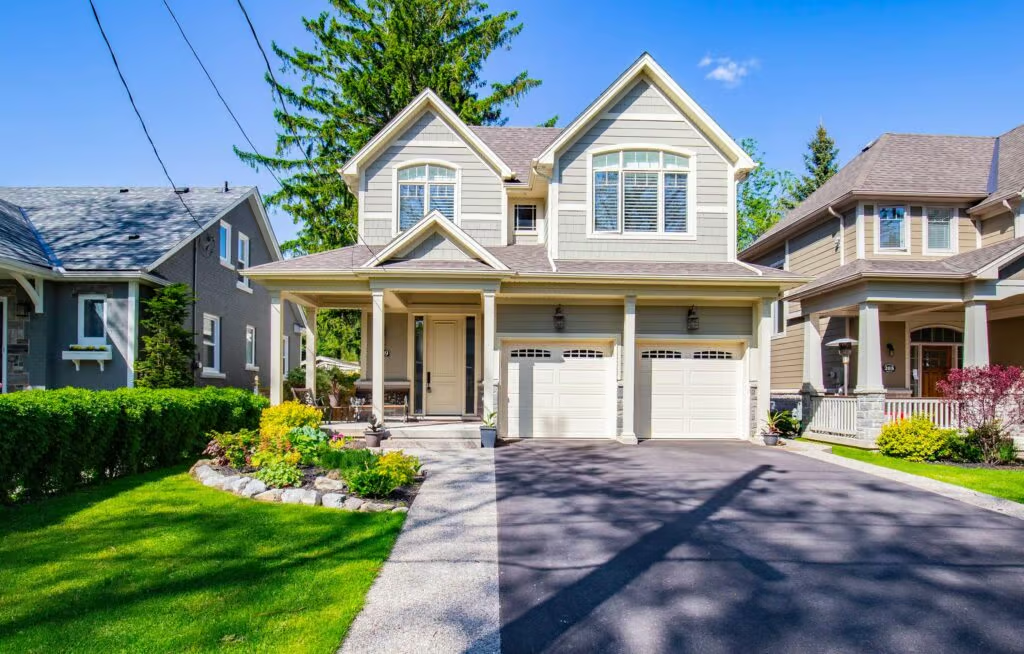
Upgrades You Should Make to Your Home Before Selling

Thursday October 31, 2019

Buying a Home

Rectangle Created with Sketch.

Have you decided to put your house on the market?

No matter the motivation behind the move, there are a few things you might want to take care of before putting your house on the market. Specifically, upgrades and maintenance. Let’s look at some of the more prominent upgrades that can help boost the value of your home in the end.

Start with the Basics

Boosting the value of your home doesn’t mean a $50,000 renovation or remodel. Sometimes, just small tweaks and repairs can really make a difference. What is hundreds of dollars in repairs could result in thousands when it comes time to sell.

Some of the basic improvements and tweaks you can make around the house to help boost the value of your home while on the market include:

• A fresh coat of paint throughout
• Installing storm doors
• Replacing old rain gutters
• Insulating the attic
• Inspecting the furnace and/or septic system
• Repairing leaks in plumbing

These updates are only a starting point. It all depends on your home and what needs to be repaired or upgraded. If you need help with plumbing, hire a professional. If you have a broken pipe at night make sure to contact round the clock plumbers.

Kitchen and/or Bathroom Remodel

Don’t overlook the power of a beautiful and functional bathroom and kitchen!

Remodelling your bathroom and kitchen spaces can have a significant impact on the value of your home when it comes time to sell. An upgrade to either of these two spaces, often the most used in the house, can create more space, ideal for larger families who fighting over it during busy mornings, while also helping create a more fresh and clean aesthetic that we all seem to desire.


  Project   Minor Remodel   Major Remodel
  Bathroom
  • Replace bathtub, vanity, sink, and/or fixtures
  • Replace tile
  • New flooring
  • Re-caulk bathtub and sink
  • Paint and hang fresh artwork
  • Replace old shower doors or remove them altogether
  • Expand existing space
  • Relocate and replace bathtub and toilet
  • Add luxury sink and faucets
  • Add a linen closet
  • Revamp lighting
  • New countertops
  • Fresh paint and décor
  Kitchen
  • Refacing cabinets and drawers
  • Upgrade countertops to a high-quality stone product, such as granite, quartz or marble
  • Replace sink fixtures and sinks
  • Upgrade lighting and fixtures, and consider undermount lighting
  • Revamp existing cabinets by sanding, painting and/or staining them
  • Paint using neutral colours and add trendy décor
  • Remove walls to create a more open-concept layout or combine kitchen and dining rooms
  • Upgrade appliances to stainless steel and/or high efficiency
  • Open concept and fewer obstacles


Before starting any renovation, you should always consult an expert. A contractor, architect or real estate agent can provide you with guidance before you embark on this journey to ensure you maximize your profits.

Landscaping

The curb appeal of your home might be more important than you think. Potential buyers do judge a book by its cover, so you want to put your home’s best foot forward from the outset. If there are overgrown bushes and patchy grass, take the time to rectify these and make the best impression on buyers.

If your landscape is usually maintained but needs a little something special, consider updating existing floral arrangements and features. A professional landscaper can help you explore ways to spice up the exterior of your home with walkways, lighting, flower gardens, mulch areas, hedges, and water features.

Exterior Upgrades

Boosting the value of your home doesn’t solely rely on flashy and expensive renovations. Often, it’s just revamping and replacing the basics to ensure that the build and quality of the home are up to par. Some of the best exterior upgrades to think about include: replacing gutters, repainting windows and replacing doors. You should also consider having your roof examined, so there are no surprises come home inspection time.

Revamping these exterior features of your home can help boost curb appeal while creating a safer and more functional home for the person or family who buys your home.

Lighting

Advanced lighting systems can have a significant impact on the value of your home. Buyers are attracted to little things that can make a space more unique and efficient, especially when it comes to lighting. Dimmer switches, skylights, chandeliers and sun tubes might be worth looking into before putting your home on the market.

Create Space

One of the biggest trends of 2018 and the past couple years is open space. Homeowners love being able to walk around and have lots of free space. A minimalistic layout can definitely help create more space in your home.

Try arranging furniture in small groupings. This can give a room or space a purpose while opening up space that may have otherwise been used inefficiently. If you aren’t sure where to begin with arranging your furniture, a home stager may be able to help. There are many benefits of staging your home before putting it on the market.

If you have lots of cupboards and counter space, why not consider removing the island in the middle of your kitchen? Some may argue that it provides additional storage and room to cook, but if your kitchen already has optimal storage and counter space, ditch the island. It can really open up your kitchen and make it more appealing to buyers.

Did you find the information in this article helpful? Good news for you, there’s a lot more where that came from! Take a look at our blog to learn more about recent news and growing trends in Canadian real estate. On the other hand, if you’re looking to sell your home, contact our team of local real estate agents today! At Woolcott Real Estate, you’ll be working with some of the best real estate agents in Burlington, Waterdown, and Hamilton.

Why Professional Photography Matters When Selling Your Home

Tuesday October 29, 2019

Buying a Home

Rectangle Created with Sketch.

So, you’ve decided to put your house on the market? Selling your home is no easy feat. Real estate is a competitive market. If you want to sell your home quickly and at the best price possible, you need to provide your listing with an edge. There are many things you can do to set your listing above the rest, but for now let’s focus on professional photography.

Some homeowners or real estate agents may try to save money by skimping on a professional photographer. By saving a couple dollars here, you can put your listing at a great disadvantage. Let’s look at some of the reasons why professional photography is essential when selling your home:

The Dangers of Using a Cellphone Camera

Finding someone who doesn’t own a cellphone these days is like finding a needle in a haystack. And with these devices comes a camera. Although the quality of most cellphone cameras has greatly improved over the years, they simply won’t provide you with the same kind of professional quality that a high-end DSLR camera, lighting equipment and home staging expertise provides. These benefits come along with a real estate photographer.
With a cellphone camera, you can end up with photos that are:

⦁ Low-quality
⦁ Grainy
⦁ Backlit
⦁ Out of focus
⦁ Blurry
⦁ Unedited

By hiring an experienced real estate photographer, such as the team of photographers that Woolcott Real Estate works with, you can feel confident that you will be provided with high-quality, professional results. Results that can truly help improve the quality of your listing.

Lack of Experience

Most do-it-yourself (DIY) home photographers lack the basic skills to properly photograph the various rooms within a house. There are many rules that professional photographers follow and techniques that they utilize to help enhance their results. This can include the kind of camera used, staging of the room, time of day the pictures are taken, angles of the photographs, and the editing process that follows the photoshoot.
One basic rule that all professional interior photographers should follow is to shoot the room in landscape. Landscape photography can help enhance the size of the room in the photo and capture everything in one shot. Shooting in portrait mode will do the exact opposite, cutting out vital aspects of the room, ultimately not providing potential buyers with a complete idea of each rooms layout and overall composition.

Difficulties of Shooting Indoors

Photographing the interior of a home presents many challenges. Experienced real estate photographers are well-aware of these issues, and are fully-equipped with the knowledge and equipment to overcome these obstacles.
Some of these challenges can include:

⦁ Poor results due to low-quality camera equipment
⦁ Time of day and lighting
⦁ Composition of a room and lack of staging expertise
⦁ Images that require professional editing software
⦁ Vertical lines and distorted-looking results

Of course, there are many more obstacles that can arise during a photoshoot. The expertise that comes with hiring a professional real estate photographer is what will help your photos overcome those challenges. A professional has the experience necessary to work quickly and efficiently, even in the most unique or challenging of situations.

The Benefits of Hiring a Professional Real Estate Photographer

There are many benefits that come along with hiring a professional real estate photographer.

For starters, they come with their own equipment. This usually includes a high-quality DSLR camera, tripod, drone, lighting, and editing software. They are the experts when it comes to home staging and taking a photograph that captures the entire room. The most experienced photographers can capture an image that not only looks pristine, but also showcases the welcoming and warm atmosphere of the home.

Professional real estate photographers tend to also have a great turnaround time. They understand that the real estate industry is competitive and truly never sleeps. They have the experience of working with many realtors and real estate teams, so they understand the importance of fast, high-quality results and presenting themselves in a professional and respectful manner.
There are truly so many benefits to working with a real estate team and real estate photographer, these points are only the beginning.

To learn more, contact our team of experts today. Woolcott Real Estate would be happy to discuss current listings with you, help you get started with selling your home, or discuss our real estate photography process.

10 Décor Tips for Staging Your Home to Sell

Tuesday October 29, 2019

Buying a Home

Rectangle Created with Sketch.

The appearance of your home is so important while it’s on the market. Both the interior and the exterior need to be arranged in such a way that enables potential buyers to mentally picture themselves living there. To achieve this state of mind, your home must be staged perfectly. Of course, the assistance of a professional home staging company is always recommended, but there are a few things that you can do on your own to get the process started.

Here are 10 favourite décor tips for staging your home to sell:


Interior Home Design

1. Flowers and Greenery

Who would think that something so simple could be so effective when staging your home. Fresh flowers and greenery can add a burst of colour, act as an accent piece, add personality to a room, enhance the lovely fragrance, and can even be used as a focal point.
Boost the curb appeal of your home by adding fresh potted plants to the porch. Not only can this improve the aesthetic of your home, but it can create a more welcoming atmosphere too.

2. Colours

The colours used within your home can really make or break the appeal of a room as it’s crucial that potential buyers can envision themselves living in your house. This becomes increasingly difficult for them to do when there is a combination of colours that simply don’t go together, or an overwhelming amount of a very bright colour.
Instead, opt for neutral or soft, muted colours throughout your home. Colours such as grey, taupe, beige, pearl, and pastel-based colours work extremely well, especially with accent pieces like throw pillows, blankets, and rugs.

3. Lighting

Any realtor will not hesitate in saying the right lighting can truly bring a room to life. Try opening the curtains and allow the natural light to flow throughout the room. As for lighting fixtures, update anything that is outdated or dingy. These very small upgrades can really go a long way. Most potential home buyers love to see that even the smallest details, like light switches, are modern and updated.

4. De-Clutter and De-Personalize

A cluttered house is most often unappealing to home buyers. Clutter can make it difficult for them to see all aspects of the house. It can even give your home a less inviting atmosphere and leave the impression that it’s messy and not regularly cleaned or maintained.
By getting rid of clutter and keeping your personal items to a minimum, not only will potential buyers be able to envision themselves living there, but they will appreciate the clean, modern aesthetic that your home has to offer.

5. Updated Furniture Arrangements

If you have any old, ragged furniture, now is a good time to give it the boot. There are many options to upgrading your furniture when on the market, whether using a professional stager who has their own inventory, renting from a furniture company or even borrowing from a friend.
Take this time to really look at the arrangement of your couches, tables and chairs. Pulling couches away from the walls can help the room appear bigger, resulting in a more welcoming atmosphere and creating walkways throughout the room. You can create smaller sitting areas or decorative table areas too.

6. Modern Artwork

Simplistic and modern artwork can really complete a room. You can coordinate the artwork to match the overall décor within a room, and style it just right so that the room is complete. You never know, you might just find the perfect addition to your new home while you’re at it.

7. Fresh Coat of Paint

You’d be surprised at how effective a fresh coat of paint can be when you’re trying to improve a room. A simple Homestyle Painting job to cover up any marks on the walls or simply to provide a fresh and updated look and feel. Not only can it help boost the appeal of a room and your home, but it’s cost-effective too!

8. Accessorize Each Room

The right accessories can complete a room. They can help add character and personality to each room, while offering an inviting atmosphere.

Try including some of the following throughout your home:

⦁ Decorative pillows
⦁ Plants
⦁ Flowers
⦁ Books
⦁ Lamps
⦁ Throw blankets
⦁ Decorative bowls and plates
⦁ Artwork
⦁ Area rugs
⦁ Seasonal décor
⦁ Candles

Of course, these are just a start. How are you going to accessorize your home?

9. Styling Tables

The dining room table is an essential part of your kitchen and dining area, but it can be often overlooked. If you plan on doing a little kitchen remodel to help sell your home you could start with decorating your kitchen with a subway tile backsplash. Use this area to showcase the character, style and décor within your home. Neutral placemats, plate settings, floral arrangements and napkins can really bring a dining room table to life.

10. Deep Cleaning

Last, but most certainly not least: cleaning. Before you have potential home buyers come to your home, you need to give it a vigorous, deep clean. Think about how immaculate a hotel room is, and clean it better than that.

Future home buyers are going to be looking at every nook and cranny, so it’s important to clean every last inch. This includes under the kitchen sink, below the beds, scrubbing the trim, inside closets, everywhere in the bathroom and, of course, emptying garbage cans once you’re done.

For more tips and tricks for selling your home, take a look through our online blog. We are always up-to-date on the latest trends, advice and news in real estate. To get in touch with the Woolcott Team, contact us today. Our team of realtors can help you find houses for sale in Burlington, Waterdown, and more.