

Get An In-Home Evaluation

What’s in Your Listing Agreement?

Tuesday March 21, 2023

Selling

Rectangle Created with Sketch.

When selling your home, you often feel like you have a million “to-do” items on your plate. So many preparations, so little time! The cleaning and decluttering tasks can seem endless. Plus, you have all the minor renovations and updates that can make your home more appealing and hopefully add to your final selling price. Beyond the sale, you have the moving logistics to consider. Often, this means searching for a new house of your own as your listing hits the market. It’s no wonder selling your home can feel like a massive undertaking!

During this process, one thing that’s probably not on your mind is the paperwork. However, this too, deserves some of your attention. Real estate contracts are legally binding, and it’s critical to understand them before making a commitment. The first document you’ll encounter is likely a listing agreement. What does this mean, and what should you know before signing anything?

What Is a Listing Agreement?

Simply defined, a listing agreement is the contract between you, the seller and the real estate brokerage you enlist to help sell your home. There are two types of listing agreements that all sellers should be aware of.

  1. Exclusive: An exclusive listing agreement means only the brokerage you are signing with has the right to find a buyer for your home for a specific amount of time. The benefit of this arrangement is increased privacy when selling, and it can also mean you will get a higher level of service from your Realtor®. Once the exclusive period ends, other agents may gain access to show your home.
  2. Open Listing: Your home will be listed on the MLS®, and other agents may show your home to prospective buyers. A non-exclusive listing can provide more exposure for your home. 

The legal details are an essential part of a seamless and successful transaction. Here are a few other resources to help you stay on course:


The Terms of a Listing Agreement

The Ontario Real Estate Association provides real estate agents with standard forms for real estate transactions. A listing agreement protects both parties and should clearly outline the terms of your contract. Clauses covered include:

  • The commission the brokerage will receive upon closing the sale, which will be split with the buyer’s agent
  • The expiry date of the contract
  • The holdover period where the brokerage can receive a commission after the listing agreement expires (usually 90 days)
  • Whether your listing will be advertised on the MLS®
  • Permission for your real estate agent to market and show your property
  • Any finder’s fees or referral fees the brokerage may receive from a third party, such as a mortgage broker or bank

Since the document is binding, you should never feel rushed or pressured and should only sign when you are confident that you understand the terms. A real estate agent who has the patience to sit down with you and happily explain the details of the listing agreement is likely someone you can count on to negotiate for your best interests. 

What Happens if You Terminate a Listing Agreement?

Can you legally terminate a listing agreement in Ontario? It depends on the contract and on your reasons for cancelling. This is one more reason to read through the terms carefully. The agreement may have a clause that allows you to back out if you can provide evidence that the agent has not lived up to their promises. However, keep in mind that a cancellation fee may apply. 

Alternatively, you could ask to be assigned to a different real estate agent within the company. This request has a higher chance of being granted since your contract is with the brokerage rather than the individual agent.

What happens if you change your mind about selling your home at all? Life can change suddenly, and your goals may no longer align. For example, an illness or a job loss may mean moving is no longer feasible. In that case, an honest conversation with your real estate agent is in order. If you back out of a listing agreement, you may be required to compensate the brokerage depending on how far along you are in the transaction.

Your best course of action is to examine your goals and resources and be sure you know what you want before you sign a binding agreement. A reputable real estate agent will be happy to take the time to answer all of your questions so that you feel confident moving forward. 


Are you ready to make the most of your transaction? Here are some tips to help make your home stand out:


Why Working With the Right Agent is Essential

Your Realtor® has a fiduciary duty to represent you throughout your transaction. What does this mean? By law, they must always work on behalf of your best interests above all else. That said, not all real estate agents are equal. What should you look for when considering someone to represent you? Here are just a few things to consider:

  • How long has the agent worked in your area? 
  • Do they have a track record of success even during challenging times, or have they only worked during the seller’s market of the last few years?
  • What level of service can you expect? For example, does the brokerage provide staging services or are you expected to handle that on your own?
  • What resources does the brokerage offer to provide maximum exposure to qualified buyers? Ideally, your agent will make extensive use of both online and offline advertising methods.

As you begin your research, you’ll notice that some agents have more experience and greater attention to the small details that make your transaction a success. Most importantly, you should look for a professional who is committed to providing the highest level of client service. Taking the time to find the right agent is well worth the effort as it means you are more likely to enjoy a positive experience when selling your home.

At Woolcott Real Estate, we are passionate about your satisfaction and success when selling your home and we’ll work relentlessly to prove it. Do you have questions about our process? Reach out to us right here or call 905-332-9223 for more information.


FSBO vs Real Estate Agent Assisted Sales: What’s Better?

Thursday March 9, 2023

Selling

Rectangle Created with Sketch.

Modern technology and easy access to information have helped to fuel a “Do-It-Yourself” phenomenon that transcends nearly every aspect of life. You can find videos at your fingertips showing you everything from how to develop your own apps to performing your own home improvements. In many ways, this new independence is a good thing. DIY can save you a lot of money in some cases. Other times, you’ll discover passions and talents you never even knew you had! But what about real estate? 

Is FSBO a Good Idea?

Should you ever consider selling your own home? Over the last two years, the changing landscape has inspired many people to list the homes as FSBO (For Sale By Owner.) A softening market and falling prices mean homeowners must explore every avenue to maximize the value of their homes. Just think of all the commission you’ll save by doing it yourself and not involving a real estate agent!

However, you must never lose sight of how much work and knowledge goes into a successful sale. Preparing your home to make a memorable first impression on buyers takes time. Performing the renovations takes considerable skill unless you plan to hire professional contractors to handle everything. In either case, the cost of preparing your home adds up.

And there’s more to it than the updates themselves. It’s about determining which improvements will have a positive effect and which ones will not be worth your time or money. This takes a level of instinct that only comes with years of experience working with buyers and sellers. Without this insight, you might be tempted to list your home as-is. In that case, your job becomes easier. But you could lose out on the true value of your home.

All that, and you haven’t even begun marketing your listing, home showings or negotiating with potential buyers!


Whether you go it alone or use an agent, the following resources will help you get the results you’re looking for:


Know Your Risks

There are many pitfalls when you don’t have the training or experience to manage a real estate transaction, especially if complications arise. All real estate contracts are legally binding documents, and knowing what you’re getting into is critical. Working with a licensed agent provides a level of legal protection you won’t have on your own. Though not lawyers, trained real estate agents know how to advocate for you and protect your interests. Plus, we do have access to some of the best lawyers around!

This professional guidance means your transaction is much less likely to fall through.

What’s the Market Temperature?

Before deciding to sell your home yourself, it’s a good idea to get an idea of what type of market you’re facing. Is it a busy seller’s market with few houses for sale and buyers frantically scooping up every listing? In that case, you might not have too much trouble finding a buyer. Keep in mind that you will still need to review all selling documents with a fine-tooth comb to ensure you are happy with the terms and that your legal interests are protected. And knowing how to negotiate effectively will help you get even better results.

If the market is slow, you may struggle to sell your home at all – never mind getting the highest possible price. When qualified buyers are few and far between, the vast outreach a real estate agent offers becomes invaluable.

Finding an Optimum Price for Your Home

Did you know that many real estate agents will bring in one of their colleagues to help them determine the best price for their listing? Why would they do this when they are already knowledgeable about the industry? 

The answer is simple. No matter who you are, your home has a special place in your heart. Selling is an emotional experience, and it’s almost impossible to stay objective even when tuned into the current real estate market. 

That said, an accurate price point is critical if you want to earn the highest possible amount from your sale. If you set your price too high, as many homeowners do, buyers will simply move on to the next listing. Pricing too low means you’ll likely earn far less than you deserve. Like Goldilocks, your initial list price must be just right!

How do you find that perfect price point? Find out more in our article What’s Your Home Really Worth?

A Discount Brokerage to the Rescue? Not in Today’s Market

In recent years, many homeowners have used discount brokerages like FairSquare Realty (formerly known as Purplebricks) to help sell their property. It can seem like a great solution. The cost is minimal, and still provides access to the expertise of a real estate agent. But remember that old saying, “You get what you pay for?”

It certainly holds true when it comes to discount brokerages. For a small fee, you can get your listing on the MLS®. You’ll even have access to an agent to help you with the paperwork. But you’ll have little to no assistance with preparing your home and negotiating with those potential buyers who are looking for a bargain. 

And remember that companies like these are generally only open during office hours. What happens when an urgent situation arises at 9 p.m.? There’s no dedicated agent you can call when you need them the most.

Discount brokerages made a killing during the real estate boom of 2019 to early 2022. However, they begin to struggle when the market slows down. Some have gone out of business entirely. Even FairSquare has stopped accepting all new clients as of early 2023. Clearly, there is no substitute for highly personalized service and professional guidance!


Selling a house alone is not all it’s cracked up to be! If you want to consider working with an agent after all, the following resources will help:


The Best Results With the Least Stress

Despite the homeowner’s best efforts, an FSBO listing often won’t earn what the house is worth – if it sells at all. When that happens, you may have to completely pull your house off the market. Or you may end up having to find a real estate agent to help you after all. Working with an experienced agent from the beginning can save you a world of stress! Whatever you need to get the best results, your agent will arrange it all:

  • Do your floors need to be redone? 
  • Should you replace your kitchen backsplash?
  • Will a new front door make your exterior pop? 
  • Will professional staging help sell your house for more money?

Your Realtor® will know precisely how to generate the maximum amount of exposure for your home and reach buyers in any market. They’ll also have access to reputable local contractors to get the job done. And your end result is typically a faster sale for more money and with the least amount of work on your part.

Woolcott Real Estate is comprised of a team of local experts who provide full service from start to finish. Our refined approach is designed to get the best results when selling your home in any market. Reach out to us today right here or call 905-332-9223 for more information.

Should You Sell Your House or Rent It?

Tuesday February 21, 2023

Selling

Rectangle Created with Sketch.

Is there an upcoming move in your future? Whether you’re relocating for a new career or just seeking a change in your life, moving can be a very exciting experience. However, you may have some big decisions ahead of you. The toughest by far is what to do with your existing home.

Selling might be the obvious choice. Housing prices remain high, even after falling somewhat since early 2022. If you purchased your property even a few years ago, you are almost certain to make a significant return on your investment. 

Then again, you’ve undoubtedly heard about the benefits of keeping an investment property for passive income and long-term equity growth. Perhaps you should hold on to your existing home and buy a second one. What is the best choice for you? Everyone’s situation is different, and selling or renting your existing home both have advantages and disadvantages. 

Keeping Your Home to Rent

Keeping your existing home as an investment can be one way to secure your financial future. Even when housing prices drop, they rarely stay low for long and the long-term trend is always up. Owning two or more properties can mean your equity grows faster as real estate values increase over time. 

With new immigration targets and a growing population, the demand for rental units could soon be greater than ever. Add monthly rental income to the equation, and the idea of becoming a real estate investor becomes even more appealing. What are the downsides?

It can be more expensive than you realize to keep a second home as a rental property. You must factor in the monthly carrying costs, especially when the house is vacant while you search for a tenant. 

There are also maintenance and repairs, insurance costs, and legal fees to consider. Collecting enough rental income to cover these expenses with some funds left over can prove challenging, especially with the high housing prices today. 


Is investing the right decision for you? The following resources will help you be successful:


Are You Ready to Be a Landlord?

Keeping your home can be a great option when you find the right tenant. Note the operative words – the right tenant. If you end up with someone who doesn’t pay rent on time or damages your property, you could be in for a world of headaches. You can try to evict them, but the process is often long and leaves you without rental income in the meantime. 

The fear of bad tenants is one of the biggest deterrents many people have to becoming landlords! However, vetting potential tenants thoroughly reduces this risk. Though there are no guarantees, performing background checks and talking with previous landlords are simple steps you can take to protect your investment.

Can You Finance a Second Property?

Holding on to your property can be even more expensive than you realize, something that becomes evident when purchasing a second home. In Canada, you need at least a 20% down payment on an income property, even if the price is $1 million or less. 

Although you could use your existing home as collateral for a second mortgage, not everyone wants to assume the risk.

Selling Your Home

If you don’t want the risk or the work that goes along with renting out your existing home, selling may be the best option. Still, the uncertainty of the market has some homeowners hesitant to let go of their property. What if you sell now only to see housing values rise in the coming months? It’s one of the questions we get asked most often, and there are three things to consider.

  1. If you’re selling and then buying a house right away, a change in the market doesn’t affect you. If prices rise later, you will have earned more money from your sale. But your new house would also cost you more.
  2. Housing prices might rise. But they could also drop even further, which means you earn less if you wait.
  3. Even if prices fall, your loss is intangible. Unlike investing in real estate, where you stand to lose real money, selling your home is nearly risk-free. What does this mean? Imagine you bought a house in Burlington ten years ago for $500,000. During the housing boom of early 2022, average prices peaked at approximately $1.3 million. As of February 2023, they now stand at about $989,000. It might be tempting to look at what could have been. However, why not look at the gain instead? In ten years, the value of your house has almost doubled!

Selling your house after building years’ worth of equity can open many doors for you. You could upgrade to a larger home or downsize and pocket the difference. Alternatively, you can invest those extra funds in a new business venture or enroll in continuing education. The possibilities are endless!


Depending on your situation, selling your home and moving on might be the best choice. In that case, these resources will help you get started:


Achieving the Best Possible Results From Your Sale

If you decide selling your home is the right option, your next step is making a plan to help you get the best possible results. 

If you have time to spare, you can clean, declutter and make minor updates that catch the attention of potential buyers. Effective staging has also been shown to increase the final price and often leads to a faster sale.

If you need to sell quickly, you may not have time to handle the home preparations that can lead to the highest selling price. 

In either case, a full-service real estate team could handle all these details on your behalf. Local experts can help you earn the highest return on your investment with the least amount of effort on your part. This level of service and expertise is essential, especially when you have a busy schedule or family life.

Do you still have questions about selling your home or using it as an investment? We work with buyers, sellers, and investors all over Burlington, Hamilton, Waterdown, and Flamborough and are happy to help you weigh your options. Reach out to us right here or call 905-332-9223 to connect to our offices today. 

Selling a Home for Someone Else? Here’s What You Need to Know

Monday February 13, 2023

Selling

Rectangle Created with Sketch.

Selling your own family home is often associated with positive emotions and excitement for the next chapter of your life. Even though you may feel some stress during the process, your transition is still a life-changing event that you can look forward to. 

When selling for someone else, it can be a different story. You may be acting on behalf of an elderly or disabled relative who can no longer handle the transaction on their own. On top of a busy schedule, there are many details to attend to and the process can feel tiring. On top of everything else, there are legalities to be aware of.

What Does Power of Attorney Mean?

You cannot sell someone else’s property if your name isn’t on the title, and verbal permission from the owner is not enough. Before you can act on behalf of someone else, you will need POA (Power of Attorney) status. You can obtain this by speaking with your loved one ahead of time while they are still of sound mind and able to make critical decisions. Although you may be able to find documents online, it is always better if an experienced lawyer guides you through the process.

Here are the two types of POA to be aware of:

  • Power of Attorney for Personal Care: This is where you will make decisions regarding medical care or health support on behalf of your loved one.
  • Power of Attorney for Property: This designation allows you to make financial decisions for someone else, including selling a house.

Assigning Power of Attorney can be a sensitive subject, and many people prefer to avoid the discussion altogether. But life is full of twists and turns, and none of us knows what’s around the corner. Being prepared just makes sense. If you find yourself in the position of selling on behalf of someone else without POA, you’re in for a world of challenges and will likely have to go through the court system.


Did you know that real estate contracts are legally binding? The posts below will help you stay on track:


An Executor is Different From POA

You may hear talk of POA and Exectorship as if they are one and the same, but they are significantly different.

  • POA grants you the ability to act on behalf of a relative while they are still living if they become unable or unwilling to manage their financial or health decisions. 
  • If you need to enact the wishes of someone who has passed away, you must be an executor. 

While one person can perform both roles, each involves a level of responsibility, trustworthiness and ability to get things done. It may feel overwhelming when a relative asks this of you, but it shows you that they think highly of you!

Your Obligations as POA

Assigning POA can mean giving up a lot of autonomy, and someone has to have a lot of trust in you to put this kind of power in your hands. It’s your responsibility to take this role seriously and aim to always do right by them. It’s not just about not defrauding someone, which is obviously illegal. However, you should be mindful and considerate, doing everything possible to ensure your loved one feels that you are listening and acting in their best interests.

Even when you have POA privileges, it’s essential to keep the lines of communication open and let your loved one know what is happening to the best of their ability. You should respect their wishes if they are still capable and want to be involved in the process. In other words, having POA allows you to manage the legalities and details of selling a home for someone else. Still, you should only act with their permission and knowledge. 

In addition, you can’t use your authority to purchase the home for yourself unless you’ve previously come to a written agreement.

The Practical Side of Selling a House

Now that you know about your moral and legal obligations as POA, it’s time to take a look at the nuts and bolts of the selling process. It’s a little different than handling your own transaction. Ideally, you want plenty of time to prepare for a sale so you can earn the highest possible return on investment. 

However, selling a house for someone else often comes with challenges and limitations. For example, finding the time to clean, declutter, paint and update a home you don’t live in can be tricky. You may have even less time to prepare if you need to sell the house quickly.

Since your elderly relative may find living in a construction zone stressful, you are limited as to what updates or renovations you would have otherwise made. Instead, you’ll focus on the minor steps you can take that will impact the final price.

How to Make Your House Stand Out With Minimum Effort

  • Going through the house with a fine-tooth comb to ensure every room is sparkling clean and clutter-free will help make a positive first impression on potential buyers.
  • Focus on the outside of the home. The effect of curb appeal cannot be overstated, and there are so many improvements you can make that will not disrupt your relative. A well-manicured lawn, seasonal decor and even a flower garden can make the home look warm and welcoming before a potential buyer steps inside.
  • Make minor repairs and updates that refresh and elevate the interior of the home. Fixing up any peeling paint and replacing worn-out hardware and light fixtures will go a long way toward maximizing the value of your sale.
  • Staging can transform the appearance of the home with far less effort than you realize. Your real estate agent may even offer this service in the listing agreement.

Looking for more tips to maximize the value of the sale without investing heavily in renovations? Our posts below will give you some ideas:


A Local Real Estate Agent Can Help

Selling a house can be time-consuming, especially when you’re acting as a POA for someone else and juggling a busy career or family life. However, a local real estate agent can coordinate every aspect of the transaction, from pricing the home competitively for the market to knowing what updates to make for the best results. Above all, you’ll have an expert standing by with a friendly ear to provide you with non-stop support every step of the way.

Do you have questions or concerns about selling a home for yourself or someone else? Our experts are ready for anything and are here to help. Reach out right here or call 905-332-9223 to connect with us today.

How Canada’s Newest Legislation Impacts Sellers

Monday January 30, 2023

Uncategorized

Rectangle Created with Sketch.

In 2023, January 1st kicked off more than a host of New Year’s celebrations. It also marked the beginning of new legislation in the real estate market designed to make Canadian homes more affordable. Are these latest developments bad news if you plan on selling your home in the upcoming year? On the one hand, these new guidelines could impact your sale by making the pool of buyers smaller. However, there are other demographic changes taking place that might negate the effects of these new laws and even increase the demand for housing. Here are four new rules that all homeowners should be aware of, especially when planning to sell in the next year or two.

Two-Year Ban on Foreign Investors

For the next two years, foreign investors are banned from buying residential properties in Canada with very few exceptions. The penalty for contravening this ban could result in being forced to sell the property and a fine of up to $10,000. 

The intention is to make houses more affordable and available for Canadian residents and their families. For many, it’s welcome news in light of the critical housing shortage in the current market. 

Will the ban make a difference? Some experts think the effect will be minimal, given that foreign buyers only make up 6% of national homeownership as it is.

As a seller, this ban could remove some potential buyers who may be interested in your home. However, available listings are still lower than average, and plenty of local residents are still searching for suitable houses. 


No matter how the market changes, some things will always stay the same! Check out some of our best tips for maximizing your sale at any time:


Anti-Flipping Tax

While still legal, flipping a house for profit has become far more expensive. Until recently, it was possible to buy a property, make a few minor cosmetic improvements and then sell it at a massive profit. We may not know the extent of how much flippers have contributed to the housing supply and affordability crisis. All we know is that the government is finally stepping in with a hefty tax that makes flipping far less attractive. The proceeds were once considered to be capital gains, which meant only 50% of the profits were taxable. Under this new legislation, 100% of all profits will be taxed as business income on any property held for less than 12 months. Some exceptions will apply for extenuating circumstances, such as:

  • Death of a family member
  • Divorce or separation
  • Job loss
  • Illness, injury or disability

The new tax implications combined with softer market values make it much more challenging to make a quick profit by flipping houses. Real estate investors will have to adopt more long-term strategies to make their properties financially viable.

When selling a residential home, this new law will likely have minimal impact as the population increases and more people re-enter the real estate market. 

Still, you’ll want to do everything you can to achieve the best results. That may include staging your home and making minor updates to make it as visually appealing as possible. And, of course, don’t forget to work with a local real estate expert who can help you price and market your home effectively!

Vacant Home Tax

Though the entire province has faced a housing shortage, the City of Toronto has been hit particularly hard. The municipal and provincial government has been under intense pressure to take action. The result in 2023 is a new tax for homeowners in Toronto to contend with. Any residential property that sits vacant for six months out of the year will now be subject to an annual penalty of 1% of the appraised value. Exceptions will be in place in certain circumstances, including: 

  • The principal resident goes into care
  • The death of the registered owner
  • Extensive renovations or repairs are being performed
  • Transfer of ownership to an unrelated person or corporation
  • A court order probits occupation
  • The property is required for employment purposes where the owner has a primary residence outside of the GTA

The purpose of the Vacant Home Tax is to encourage existing homeowners to either sell or rent out their properties and free up much-needed housing for city residents. With the average house price in Toronto currently sitting at over $1 million, this tax could be a significant burden, especially with no rental income to help cover the carrying costs. The revenue collected will support affordable housing initiatives in the city.

How will this tax affect the real estate market in the GTA? Any homeowner wishing to avoid paying might rush to list their vacant property, which could result in a temporary influx of houses for sale. If you plan on listing your home in the next few months, you may need to work extra hard to stand out from competing sellers.


You can’t discount the power of accurate information if you want to sell your home and get the best results. The resources below will help:


Canada’s Immigration Targets

All of the above legislation may have worked to make housing more affordable. However, Canada’s new immigration targets may offset any benefit. One of the lasting effects of the pandemic was that a vast number of people permanently left the workplace. 

To assist businesses scrambling to fill staffing shortages, Canada will welcome approximately 1.5 million new residents to the country over the next three years.

Many of these newcomers will settle in or near the GTA, and all will need housing. As the population grows, we could soon see another surge in demand for both rentals and properties to purchase. If that happens, the market could become more competitive, with houses selling quickly and commanding higher prices.

Do you have questions about the selling process or how to maximize your results in the current market? Our trusted experts are standing by and happy to help! Reach out today right here or call our office at 905-332-9223.

The Power of Staging When Selling Your Home

Wednesday January 18, 2023

Selling

Rectangle Created with Sketch.

Selling or buying a home is about more than finding a place to rest your head. It is a business decision as much as a personal one, involving many calculations to determine if a deal is viable. As a seller, understanding your buyer’s motivation is essential to everything you will do throughout the transaction. From deciding what home upgrades make the most financial sense to comparing the value of other homes in the neighbourhood, your research will help you enjoy the best outcome. However, you never want to lose sight of the fact that purchasing a home is also one of the most emotional moments of your buyer’s life. And that brings us to why staging is so important. 

Creating an Impactful First Impression

Prospective buyers often decide if they love your home before even getting out of the car. With effective staging, you can wow them the moment your house comes into view. By the time they reach the front door, they should already be imagining living in your home. Succeed in making that instant first impression, and you’ve accomplished the most challenging aspects of the sale. Everything from now on is about maintaining the momentum you have gained from that first moment.


Staging is more about design and flow than renovating or upgrading your home. If you want even more ideas to maximize the value of your sale, check out the posts below:


Inspiring the Imagination

A good real estate agent knows how to talk and present the best highlights of any listing. But words pale in comparison to what potential buyers can see, feel, touch and sense for themselves. Hence the old saying, “A picture is worth a thousand words.” 

However, nothing is more valuable than the picture someone creates in their own imagination. As a seller, staging allows you to use this principle to increase the perceived value of your home. How you decorate and the fixtures you place in each room will have a dramatic effect on a buyer’s subconscious. 

When decorating to your own tastes, you’ll fill your home with your favourite personal belongings. Pictures of loved ones may smile at you from every wall. But staging to sell is different.

For example, you may have read about the importance of “depersonalizing” your home. That means removing all those personal touches that remind potential buyers that they are in your home. Instead, it should be beautiful but impersonal. That’s what allows them to fill in the details with their own imagination.

Staging is About the Whole Effect

Strategic renovations can help increase the value of your home, but staging takes it even further. Every decor item has a purpose, and everything is designed to flow seamlessly from one room to the next. Countless tiny details all come together for one stunning effect. For example, even something as simple as moving a tall cabinet to the furthest wall away from the window can help by increasing the natural light in the room. 

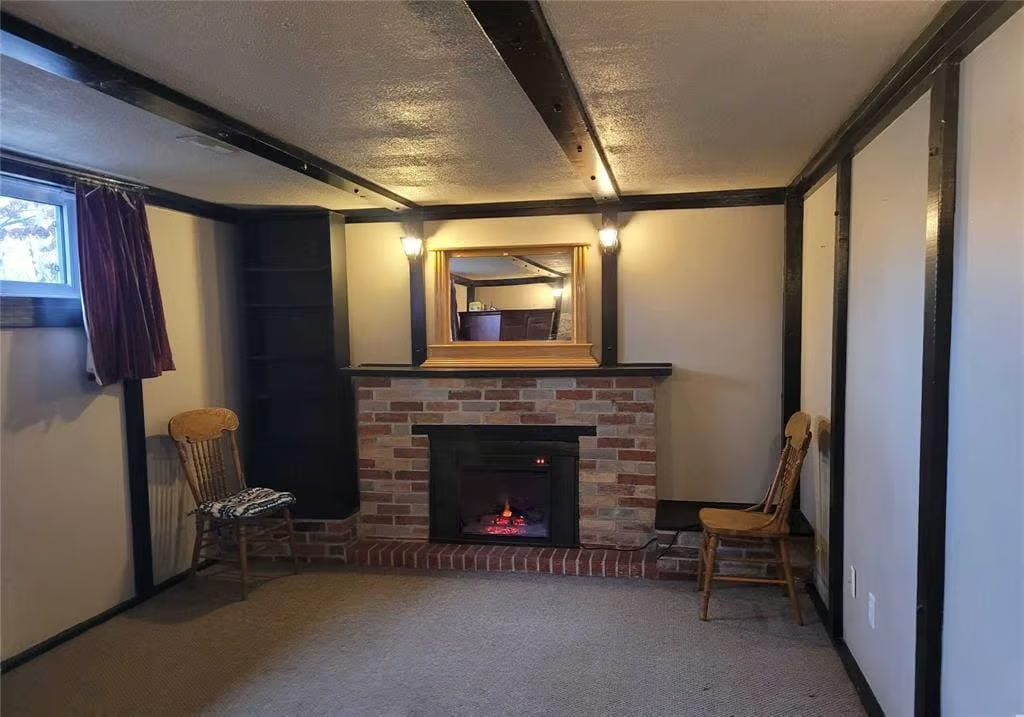
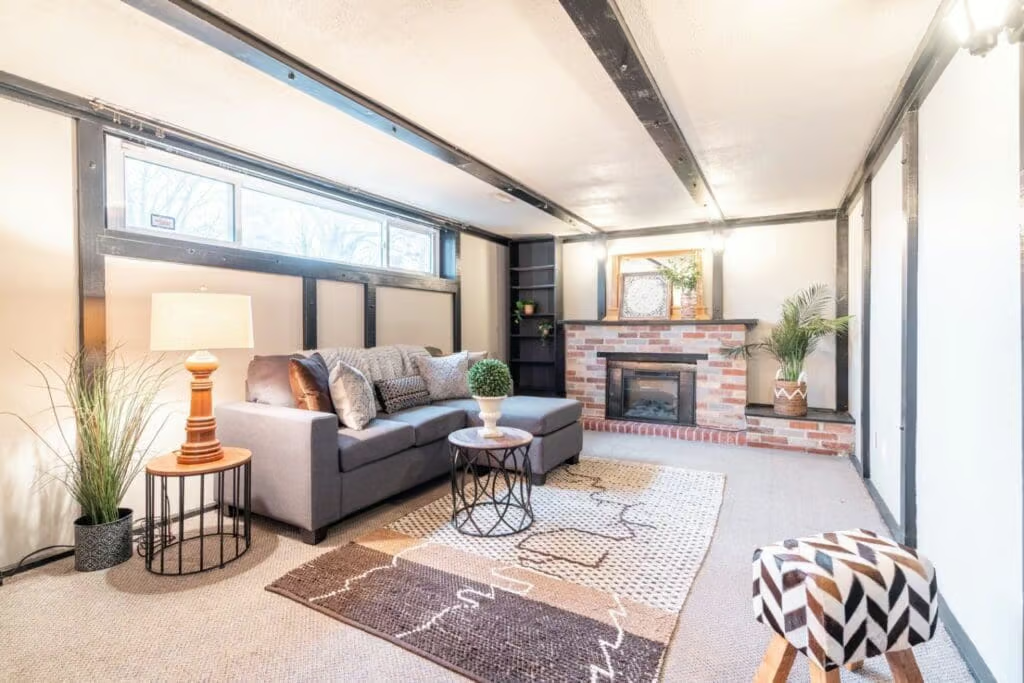
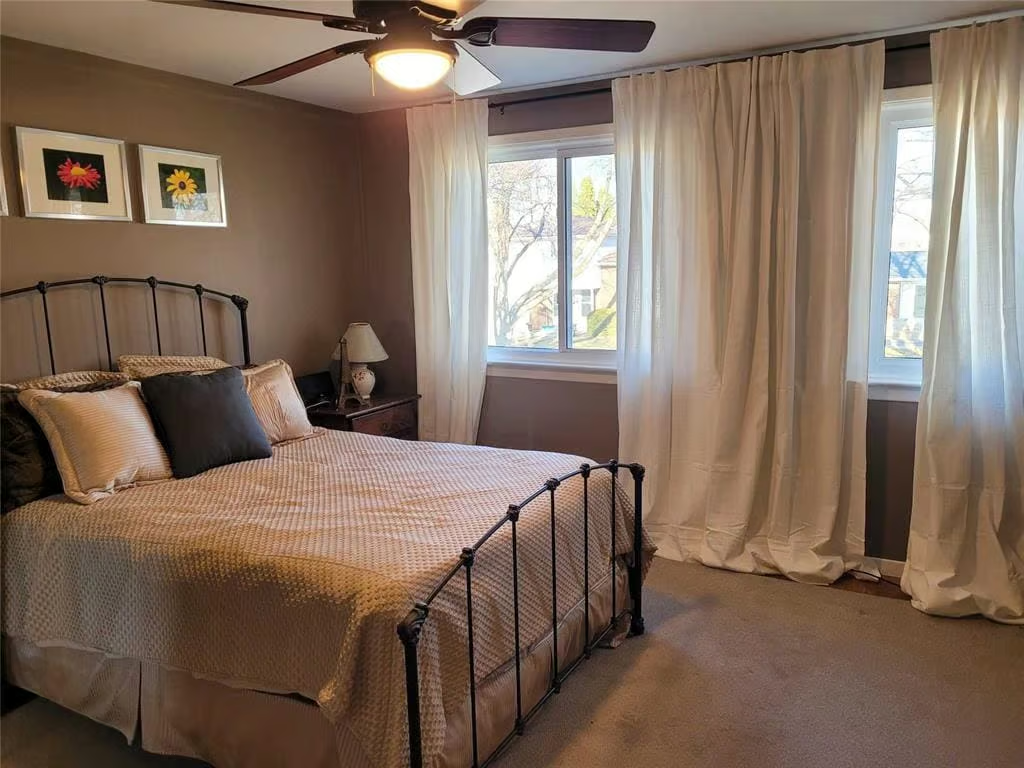
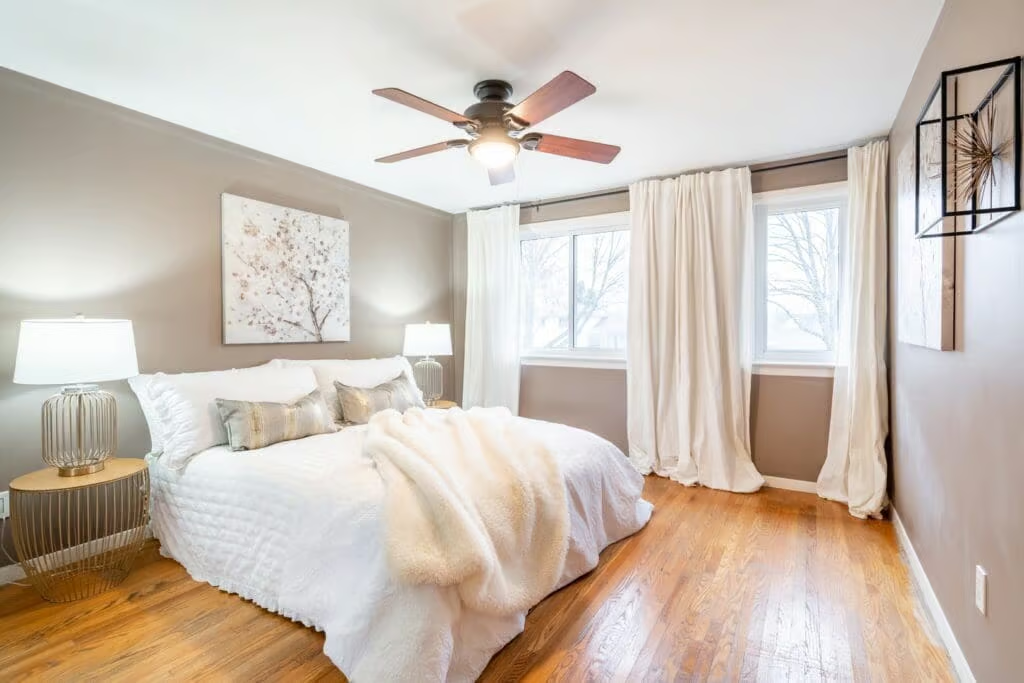
The before and after photos below show how transformational proper staging can be:

Before staging, this basement appears dark and stuffy.
It’s hard to believe this spacious, bright basement is the same room as above!
This bedroom isn’t bad, but it could certainly use an update.
A few strategic changes later, and presto! The effect of staging is almost magical.

The Numbers Don’t Lie

Effective staging relies on an impeccable eye for design, which is why many sellers are willing to invest thousands of dollars in hiring a professional staging company. Each dollar spent comes back multiplied when the transaction closes. The effectiveness of staging is well documented. One study by the Real Estate Staging Association suggests that 85% of staged homes sold for 5% to 23% over their list price. The jury is out, and there is very little debate that staging works to help sell a house faster and for more money.


Understanding the market is another key factor in your selling success. The articles below will help fill you in:


Your Staging Options

Should you stage your home yourself or hire in-house professionals to do it for you? The answer depends on your resources and whether or not you have the time and ability to do it well. Proper staging requires an eye for detail, design, and colour coordination. And remember, it’s not just about making your house look beautiful. Professional stagers know what buyers want to see and create your design for maximum impact. For the most part, allowing trained experts to handle the process for you will result in a more successful sale. On the other hand, it can also get expensive, especially when hiring a designer with a stellar reputation. If you have a flair for design and decide to do it for yourself, here are some tips to help:

  • Try to imagine who your prospective buyer might be and plan your design in a way that appeals to them. For example, someone looking to downsize may prefer an old-fashioned look. In contrast, a first-time buyer might want something more modern and trendy.
  • Clean and declutter your home, especially in the areas that get the most attention. Many buyers focus heavily on the living room, kitchen, bathroom and bedrooms. A sparkling clean house is the first step to wowing buyers and will help you achieve results–even if you do nothing else.
  • Remember that less is more. Too much furniture or furniture that is too big for the room can make your house seem cramped. 
  • Focus on maximizing the natural light in your home. Replace dark curtains with sheers that allow the sun to shine through. Place lamps strategically to light up naturally dark corners.

Don’t Forget the Outside

When dressing up your home for sale, don’t forget about the outside. The first impression begins at the end of the driveway. A clean front porch, well-kept lawn, and well-placed seasonal decor will go a long way to making your home seem welcoming and desirable!

At Woolcott Real Estate, we believe so strongly in these results that we offer free staging services to every listing we represent. Helping you achieve a stress-free sale at the highest amount possible is our top priority. Reach out to us right here or call 905-332-9223 for more information or to get started today.